

Networking company Nine Tiles Ltd. was founded by John Grant. Sinclair met with Grant in April 1979 to discuss the BASIC interpreter for the ZX80. To keep its cost low, the integer BASIC had to fit in a 4 Kb ROM. Between June and July Grant wrote the code which was 5 Kb in size—the following month was spent get it to fit it in the ROM thereby sacrificing commands such as DATA, READ, RESTORE . Sinclair never paid royalties, Nine Tiles was paid when Amstrad bought the rights to the ROM. Nine Tiles still owns the right to the ZX80 and ZX81 ROMs to this day.
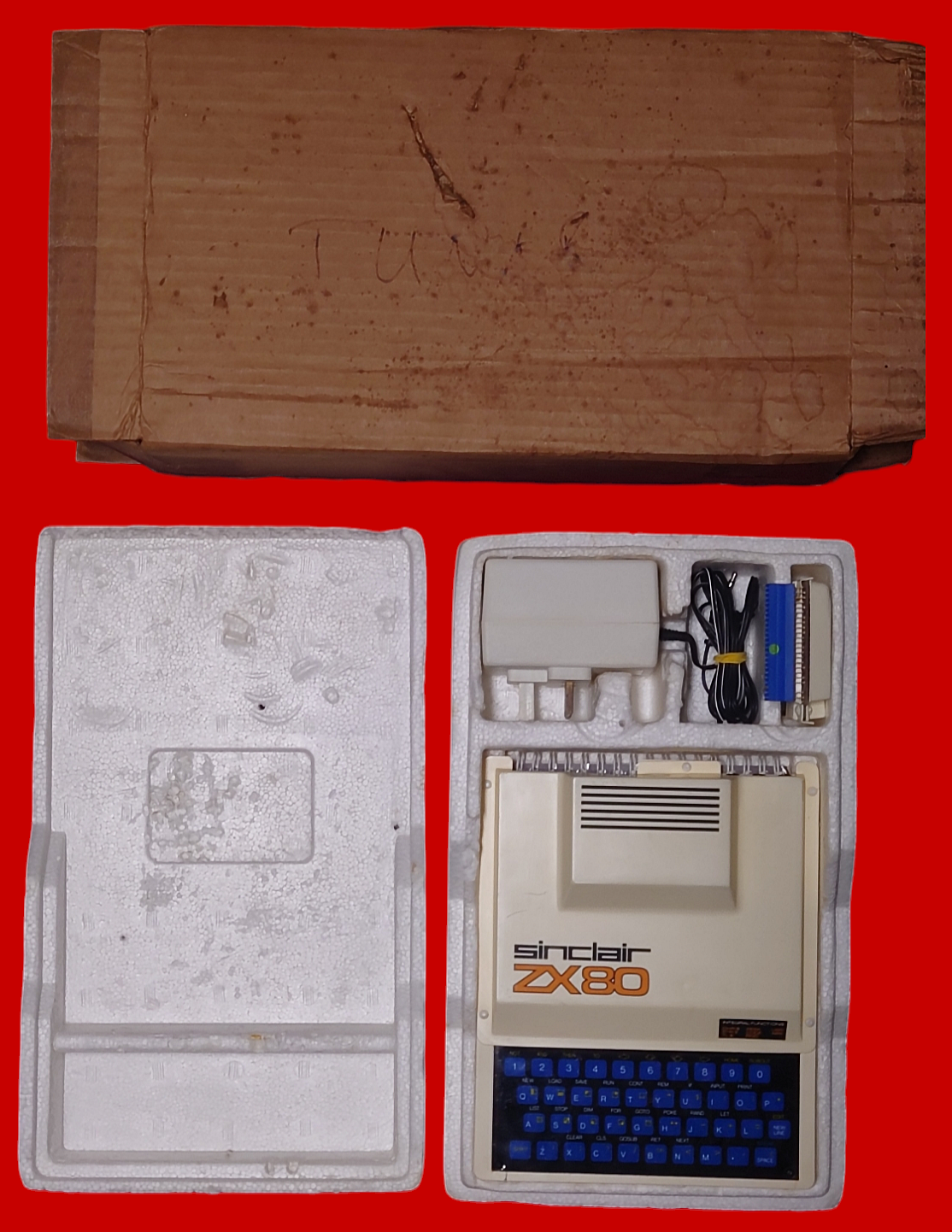
The thin case halves are vacuum formed and very prone to cracks to even missing edges, where the plastic rivets fasten the two halves together. Later models such as the US version were injection moulded and less susceptible to cracks. The “go faster” stripes on top of the case are no real cooling holes, although some users would drill holes  to help cooling down the computer.
The ZX80 could be upgraded with a 8 Kb ZX81 ROM (£19.95), although it would lack the hardware to support the ‘FAST’ command. The upgrade did include a new keyboard overlay. Support for ‘SLOW’ and ‘FAST’ could be added with a little PCB.
Memory upgrades could be in the form of a 1-3Kb Ram Pack or some time later when memory chip prices dropped, a 16Kb Ram Pack.